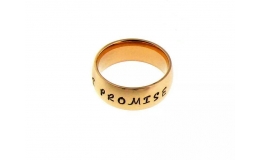
No, a quality stainless steel ring will not turn your finger green. That green stain is caused by copper reacting with sweat, lotion and air, and 316L stainless steel isn’t a copper alloy. Instead it is protected by a chromium oxide surface film that keeps it from corroding against your skin.
Why do some rings turn your finger green?
The culprit is almost always copper. When copper sits against skin, moisture, salt from sweat, and the acids in soaps and lotions slowly react with it. That reaction forms copper compounds, which are greenish, and they rub off onto your finger as a ring-shaped tint. The mark itself is generally harmless and comes off with soap and water, but nobody wants to see it.
Copper turns up in more jewelry than you might expect. These are the usual suspects:
- Solid copper, brass and bronze rings, which are mostly copper by design
- Nickel silver, sometimes called German silver, which contains no actual silver and plenty of copper
- Gold-plated or silver-plated base metal, once the thin top layer wears through
- Lower-karat gold, where copper makes up a bigger share of the alloy
- Sterling silver, which is 7.5 percent copper and more often darkens skin gray or black
Heat, humidity, heavy sweating, swimming and certain hand creams all speed things up. That’s why a cheap ring might look fine for a week in winter and then stain your finger after one summer afternoon outdoors.
Why doesn’t 316L stainless steel turn skin green?
Two reasons. First, there’s no copper in the recipe to react. Second, the chromium in stainless steel bonds with oxygen to create a very thin, transparent oxide film across the entire surface. That film keeps sweat and moisture from attacking the metal underneath, and if it gets scuffed, it rebuilds itself on contact with air.
The molybdenum in 316L adds extra resistance to salt, which is why this grade is used near the ocean and in medical settings. In everyday terms, it means a 316L ring can go in the shower, to the beach and through a full workday without rusting, tarnishing or leaving color on your skin. Our rings are made from exactly this steel, so a 6mm gold steel name band keeps its color without turning your finger green the way gold-plated brass can.
How do common ring metals compare?
| Ring metal | Can it turn skin green? | Why |
|---|---|---|
| 316L stainless steel | No | No copper; self-repairing chromium oxide film |
| Titanium | No | Stable oxide layer, no copper |
| Platinum | No | Highly unreactive precious metal |
| 14k or 18k gold | Rarely | Small copper share; usually stable |
| 10k gold | Sometimes | More copper and other base metals in the mix |
| Sterling silver | Occasionally; more often dark marks | Contains some copper and tarnishes |
| Copper, brass, bronze | Yes, commonly | Mostly copper |
| Plated fashion jewelry | Yes, once plating wears | Copper-bearing base metal underneath |
Can a stainless steel ring ever leave a mark?
Occasionally someone notices a faint gray smudge under a steel band. In almost every case, that’s buildup rather than the metal reacting: dried soap, sunscreen, makeup or lotion collects inside the ring and rubs onto the skin. Soap, warm water and a few seconds of scrubbing take care of it.
It’s also worth knowing that not every ring sold as “stainless” is the same. Some inexpensive jewelry uses lower grades with less corrosion resistance, or uses plated finishes over another metal entirely. Asking for the specific grade, such as 316L, is the simplest way to know what you’re buying. Our answers to common name ring questions cover the steel we use in more detail.
Why does one ring stain some people and not others?
Body chemistry plays a real part. Sweat varies from person to person in how salty or acidic it is, and that can change with heat, exercise, diet and even some medications. Two friends can buy the same brass ring, and only one ends up with a green band on her finger. Your own results can also shift with the seasons, which is why a ring that behaved all spring might start leaving marks in July. Frequent hand washing and gardening gloves that trap moisture can add to the effect.
Common myths about green fingers
- “Only cheap rings do it.” Low-karat gold and sterling silver can discolor skin too, because both contain copper.
- “Green means you’re allergic.” The tint is a chemical stain, not an allergy. An allergic reaction looks more like a red, itchy rash.
- “Clear nail polish fixes it for good.” Polish only buys time; it rubs off and has to be reapplied.
What should you do if a ring already turned your finger green?
- Wash the area with soap and warm water; most of the tint lifts right away.
- For stubborn spots, a little rubbing alcohol on a cotton ball usually finishes the job.
- Give your finger a day off from that ring.
- If you want to keep wearing the old ring, a coat of clear nail polish on the inside acts as a short-term barrier, though it wears off and needs redoing.
- For something you can wear every day without thinking about it, switch to a stainless steel or titanium band.
Which ring styles hold up best for active, outdoor lives?
If you garden, fish, wrench on engines or spend summers in the water, choose a band built for it. The 8mm camo stainless steel name ring is a favorite for hunters and outdoor lovers, while the full steel ring collection includes silver, gold, black, blue and rainbow finishes on the same 316L steel. Each one is made to order by hand and goes out the same day.
A quick rule of thumb: if a ring is priced like a novelty and nobody can tell you the metal, assume it might turn your finger green. If it is clearly labeled 316L stainless steel, you can wear it in the rain, the pool and the kitchen sink without that worry.
Ready to make yours?
Want the warm look of gold without the green finger? See our gold-tone stainless steel bands and stamp them with the names you love.
Frequently asked questions
What metal turns your finger green?
Copper is the usual cause. Brass, bronze, nickel silver and plated base-metal jewelry all contain copper, which reacts with sweat and lotion to form a green residue.
Is the green mark from a ring harmful?
The green tint is generally harmless and washes off with soap and water. If you notice itching or a rash instead, that may be a skin reaction worth asking a doctor about.
Will a gold-colored stainless steel ring turn my finger green?
A gold-tone ring made from 316L stainless steel has no copper base to react, so it won't leave the green stain associated with gold-plated brass.